“Which area is best for families?” is one of the first questions newcomers ask. The honest answer is that it depends on your children’s schools, your work, how often you want to pray at the Haram and your budget.
Rather than a ranking that would date quickly, this guide gives you the criteria families actually use and a simple way to test each area before you sign a lease.
Quick answer
Short answer: The best family neighbourhood is the one that balances four things: a good school within a short drive, parks and daily shops nearby, a manageable route to the Prophet’s Mosque and your workplace, and rent you can sustain. Shortlist two or three areas, then visit each at school-run time and at Maghrib.
What families say matters most
The four family priorities
- Schools: distance and route to a school you trust.
- Daily life: parks, a mosque, a supermarket and a clinic close by.
- Commute: to work, and to the Prophet’s Mosque at your usual prayer times.
- Budget: rent and running costs that work all year.
Our neighbourhoods guide gives an overview of the main areas to start your shortlist.
Schools first
For many families, the school decides the neighbourhood. Public schools are under the Ministry of Education, and our schools and tutoring guide explains the options.
Tip
Find the school first, then search for homes within a short drive of it. Morning traffic near schools can turn a short distance into a long trip.
Parks, mosques and daily shops
Young children need space to play, especially in the cooler months. The Madinah Region Municipality develops parks and walkways across the city; our guide to family parks and walkways lists places families use.
A neighbourhood mosque, a baqala and a pharmacy within walking distance make daily life much easier.
Close to the Haram or further out?
Areas near the Prophet’s Mosque give easy access to prayers but are busier, especially in Ramadan and pilgrim seasons. Areas further out tend to offer more space and quieter streets, with a drive or bus ride to the centre.
| Factor | Central areas | Outer areas |
|---|---|---|
| Access to the Haram | Walk or short ride | Drive or bus |
| Space | Usually smaller flats | More villas and larger flats |
| Noise and crowds | High in busy seasons | Generally quieter |
| Parking | Harder | Usually easier |
Some families like quieter districts with their own historic mosque, such as the area around Quba; see our guide to living in Quba.
How to test a neighbourhood
Testing an area before you sign
1
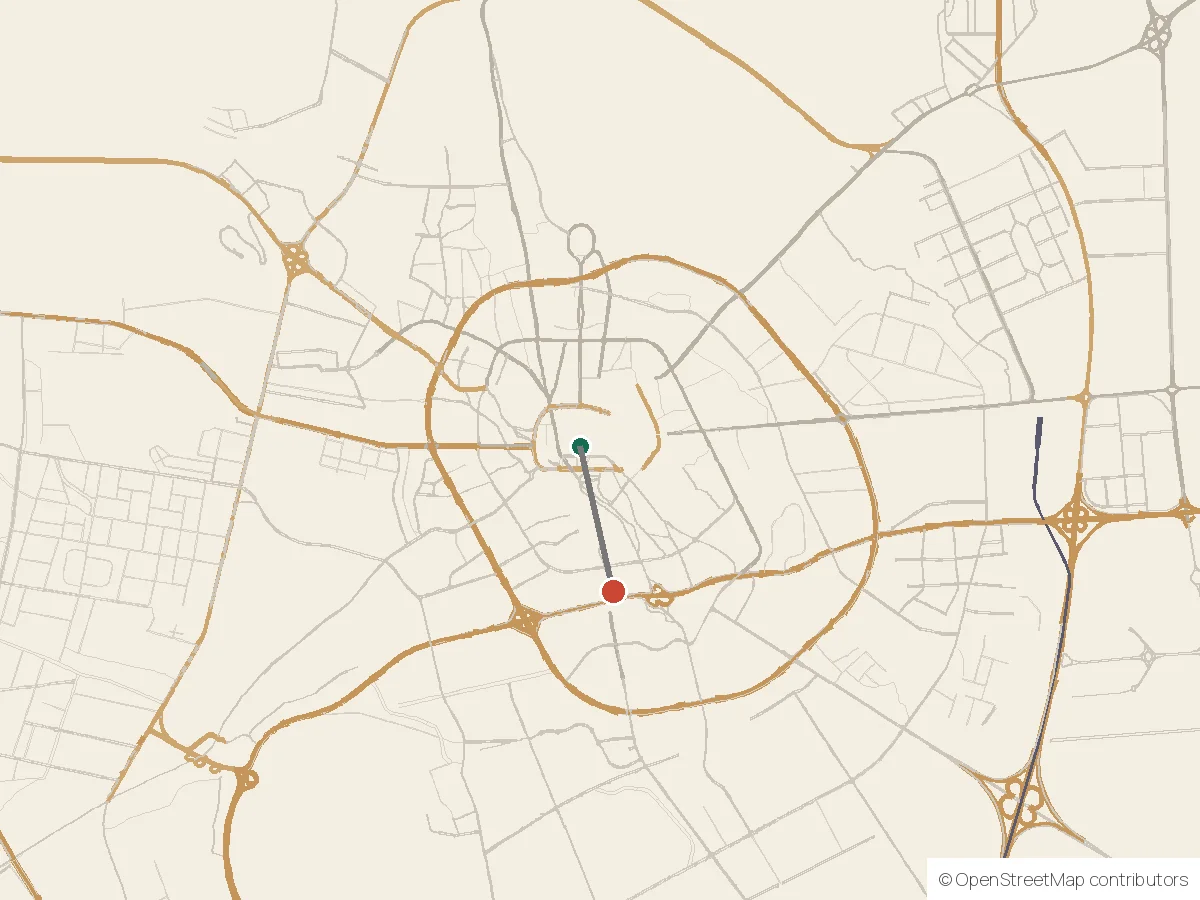
Map the key routes: home to school, work and the Haram, using OpenStreetMap or another map app.
2
Visit at school-run time: check traffic and parking.
3
Visit at Maghrib: see how busy and noisy the streets get.
4
Walk the block: find the nearest mosque, park, shop and pharmacy.
5
Ask neighbours: about water, maintenance and noise.
6
Check the lease: use an official Ejar contract.
Daily routines to test before you commit
A neighbourhood can look perfect on a map and still be hard work every day. Before you sign, picture a normal school week and walk through it.
- The morning school run: how long does it take at the time you would actually leave, and is there a safe place to drop children?
- The weekly shop: is there a supermarket or baqala you can reach without crossing a busy road with children?
- Friday and prayer times: can you reach a mosque on foot, and how busy does the street get before Jumu’ah?
- Evenings outdoors: is there a park, walkway or open space within a short drive for the cooler months?
- Getting to the Haram: how will you get there on a busy night, and how will you get home with tired children?
Contracts, utilities and paperwork
Families moving house have more paperwork than most. Use an official contract on the Ejar platform, which records the lease and the terms you agree. Before you move in, check how electricity and water are billed, and make sure the address is linked to your National Address so deliveries and services can find you.
Keep copies of the lease, the handover photos and any receipts in one place. If something breaks in the first weeks, these records make it easier to agree who pays for the repair.
Tip
Take dated photos of every room, the kitchen and the water heater on the day you collect the keys. They help at handover and when you leave.
Thinking about the long term
Children grow, schools change and family needs shift. When you compare areas, ask how the neighbourhood will work in two or three years, not only this term. A slightly longer drive to the Haram can be worth it for a calmer street and a school you like. Equally, a central flat can suit a family with older children who want to pray at the Prophet’s Mosque often.
Talk to families who have lived in the area for a while. Their experience of summer heat, Ramadan traffic and pilgrim seasons will tell you more than any listing.
Questions to ask the landlord
Family-specific questions
- Is the building family-only?
- Is there a safe play area or roof access?
- How is water storage and pressure?
- Is there covered parking?
- Who handles maintenance, and how fast?
FAQ
Which is the single best area for families in Madinah?
There is no single answer. It depends on your school, work and budget. Shortlist two or three areas and test each one.
Is it better to live near the Prophet’s Mosque with children?
It suits some families, but central areas are busier and space is tighter. Many families choose a quieter area and drive in.
Where can I compare areas?
Start with our Madinah neighbourhoods guide.
Last checked: 29 October 2026. No rents are quoted.