Author: Malik Sherjeel Awan

  • Schools and Tutoring in Madinah: A Practical Guide for Resident Families

    Schools and Tutoring in Madinah: A Practical Guide for Resident Families

    For families moving to Madinah, choosing a school is often the biggest decision after choosing a home, and the two are closely linked. This guide explains the main types of school, how registration generally works for expatriate children, which documents to prepare, and how to choose a tutor or Qur’an class with confidence. It names no schools. Instead, it gives you questions to ask so you can compare the options in your area.

    Public and private schools: the basic picture

    Public (government) schools follow the Saudi national curriculum and teach in Arabic. The Ministry of Education’s admission rules for non-Saudi students include:

    • Non-Saudi children are admitted within a set share of seats defined in an official Cabinet resolution, applied at district or governorate level (see the Ministry’s page for the current wording).
    • Seats for non-Saudis are allocated once Saudi students and those treated as Saudi have registered, and the student needs valid legal residency.
    • When seats are limited, there’s a priority order. The Ministry lists children of government-sector contractors first, then private-sector families.

    The full conditions are on the Ministry of Education’s admissions page. Always read that page for the current rules rather than relying on summaries.

    Private schools include schools following the national curriculum and schools offering international or community curricula. Admission criteria, fees and timelines are set by each school, within Ministry regulations.

    Registration through Noor

    Saudi schools use Noor, the Ministry of Education’s electronic system. The Ministry’s pre-enrollment service for the first grade and the third level of kindergarten in public schools is done electronically: parents access the service, sign in through the national identity platform (Nafath, as listed on the Ministry’s current pre-enrollment page), then choose preferred schools. Sign-in methods and windows are announced each year — check the Ministry’s current Noor / pre-enrollment guidance before you start.

    Tip: Begin early. Registration windows are set for each academic year, and seats near popular residential districts can fill up.

    Documents to prepare (especially if arriving from abroad)

    The Ministry’s admissions page says students coming from abroad need their previous academic certificates for the right grade level. These documents must be certified by the education authority in the country they came from, and by the Ministry of Foreign Affairs, the Saudi Embassy or the Cultural Attaché, as the page describes. If there’s been a gap in schooling, an official statement may be needed.

    Get these certified before you move. It’s much harder to arrange from Madinah.

    Choosing a school: questions worth asking

    1. Curriculum: Saudi national, international or community? Will it suit your child’s next move or university plans?
    2. Language support: Is there help for children still learning Arabic or English?
    3. Commute: How long is the drive at school-run time from your district? Distances in Madinah can be longer than they look on a map, especially near the central area.
    4. Transport: Does the school run buses, or will you need to arrange your own?
    5. Communication: How does the school share grades, attendance and announcements?
    6. Licensing: Can the school confirm it’s licensed by the Ministry of Education?

    Our neighborhoods overview can help you weigh schools against where you live.

    Tutoring and Qur’an classes

    Many families in Madinah look for extra support, such as exam-season tutoring, Arabic help for new arrivals, or Qur’an memorization and tajweed classes.

    For home tutors:

    • Ask for references from families you can contact.
    • Start with a trial session with a parent present or close by.
    • Agree subjects, schedule, fee and cancellation terms in writing.
    • Hold sessions in a shared family space.

    For Qur’an circles and classes:

    • Ask your local masjid what it offers. Many masjids run classes or can point you to organized programs.
    • Find out about the teacher’s background, how classes are organized for boys and girls, and how progress is tracked.
    • Pick a schedule that suits school hours and the summer heat.

    For tutoring centres: Choose centres that can show their business registration and give clear contact details.

    What a good education listing shows

    In our directory, a trustworthy school or tutoring listing should include the registered name, curriculum or subjects, location or service area, official contact channels and how to apply or book. Be careful with offers that guarantee grades or ask for large payments before any trial.

    More for families is on the Living in Madinah homepage and in our blog. Related on this site: Best neighbourhoods in Madinah for families and Hosting visiting parents in Madinah.

    General information only. Admission rules and dates are set by the Ministry of Education and individual schools and may change. Always confirm with them directly.

    Last checked: 16 November 2026. Rules, fees and services change; confirm on the official sources below before you act.

    Sources

  • Rawdah Permit on Nusuk for Madinah Residents: Booking and Visiting

    Rawdah Permit on Nusuk for Madinah Residents: Booking and Visiting

    Quick answer

    How Madinah residents and visitors book a Rawdah permit through the official Nusuk app, plan the visit for the family, and avoid fake look-alike apps.

    Living in Madinah means Masjid an-Nabawi is close by, and many residents hope to pray in Ar-Rawdah Ash-Sharifah. Visits to the Rawdah are organized through a permit system. The official route is the Nusuk app, under the Ministry of Hajj and Umrah. This guide covers how booking works on official channels and how to plan the visit calmly, especially with family. Always follow the live instructions in the Nusuk app — confirmation steps, entry codes and timing rules can change.

    Key takeaways

    • Why a permit is needed: The National Platform (my.gov.sa) describes the Rawdah permit as a fully online service.
    • Step 1: Use the official Nusuk app only: Download Nusuk from the official app stores.
    • Step 2: Book the slot: The National Platform sets out the in-app flow like this:
    • Step 3: Complete any confirmation or entry steps shown in the app: After you book, open your permit in Nusuk and follow every on-screen instruction — including any confirmation, agreement to rules, or entry-code steps the app shows before your visit.

    Why a permit is needed

    The National Platform (my.gov.sa) describes the Rawdah permit as a fully online service. Its purpose is to organize visits, make it easier for people to pray, and keep worshippers comfortable and safe. In practice, the permit gives you a set time slot so the area doesn’t become dangerously crowded.

    A permit is needed for the Rawdah area specifically. Praying elsewhere in Masjid an-Nabawi doesn’t need one.

    Step 1: Use the official Nusuk app only

    • Download Nusuk from the official app stores. Check that the publisher is the Ministry of Hajj and Umrah.
    • Ignore websites, social media accounts or “agents” offering to sell Rawdah slots. The official service is free, and look-alike apps and paid “booking help” are a known scam risk.
    • Sign in with your details. Residents normally use their residency information, and visitors use their visa or passport details, as the app asks.

    Step 2: Book the slot

    The National Platform sets out the in-app flow like this:

    1. From the home page, open the Rawdah section.
    2. Choose the Rawdah prayer permit service for men or for women.
    3. Select any companions.
    4. Choose an available date and time.
    5. Review the summary and confirm, or pick a different slot.

    Family tip: Men and women have separate visiting times, so a mixed family usually makes separate bookings. Plan who will look after the children, and where you’ll meet afterwards.

    Booking for family and guests

    The official Rawdah service on Nusuk is short: open the Rawdah section, choose the permit for men or for women, select the companions, pick a date and time, then confirm. The key step for families is the third one. Anyone you want on your slot has to be on your companions list first.

    Companions on Nusuk (official)

    • Cost: the Rawdah permit service is listed as free on Nusuk.
    • Dependents: family members you sponsor can be added with no fixed limit, the Ministry said in February 2024 (Ajel report).
    • Other companions: people you don’t sponsor, such as visiting friends or in-laws, are capped at four.
    • Removing someone: a companion can be removed 15 days after they were added, per the same Ministry post.
    • Separate slots: the permit is booked for men or for women, so each group books its own time.

    App screens change. If what you see doesn’t match this list, follow the live app.

    Adding a companion, step by step

    Adding a relative or guest

    1

    Open your account. In the Nusuk app, tap your profile icon at the top of the home page.

    2

    Find companions. Tap the plus icon, then Manage Companions in account settings.

    3

    Enter their details. The Ministry lists the ID number, date of birth and city of residence. Visitors use the details their visa or passport gives them.

    4

    Add and check. Tap Add, then confirm the person now shows on your list.

    5

    Book. Go to the Rawdah section, choose the men’s or women’s permit and tick the companions joining that slot.

    Do this a few days before your guests arrive. If a detail doesn’t match their documents, you’ll want time to sort it out.

    Planning for a mixed family

    Because slots are split by men and women, think of the visit as two small trips that meet up afterwards.

    Before you book

    • One adult in each group knows how to open the permit on their phone
    • Both slots fall on the same day, so you only travel to the Haram once
    • A fixed meeting point outside, such as a gate number, is agreed in advance
    • Someone has a plan for children who stay outside the Rawdah area
    • Phones are charged and Nusuk notifications are on

    Staff manage entry on the day. Even with a permit, follow their directions at the gate, and be patient if the area is full.

    Step 3: Complete any confirmation or entry steps shown in the app

    After you book, open your permit in Nusuk and follow every on-screen instruction — including any confirmation, agreement to rules, or entry-code steps the app shows before your visit. Deadlines, QR codes and timing details are set in the live app and can change; do not rely on unofficial blogs or screenshots from past seasons.

    Set a phone reminder the moment you book, keep notifications on, and re-open the permit close to your slot so you have whatever entry details the app provides.

    Step 4: Plan the visit itself

    • Arrive early at the gate shown on your permit. Gates can differ for men and women.
    • Travel light. The app’s confirmation or terms screens list items not allowed inside, so leave large bags and other listed items at home.
    • Get there sensibly. Parking and drop-offs close to the Haram are busy. Many residents use the Madinah Bus network, ride-hailing or walking; see our getting around guide.
    • Mind the heat while waiting outside in summer: carry water and use shaded areas.

    If you can’t find a slot

    Slots are released in batches and can go quickly, particularly in busy seasons. Some practical approaches:

    • Check the app at different times instead of refreshing constantly.
    • Be flexible about prayer periods and dates.
    • Keep praying in Masjid an-Nabawi in the meantime. No permit is needed for the rest of the mosque.

    In January 2025 the Ministry added two options inside Nusuk (Gulf News report): instant booking, which allows repeat visits through the year subject to the mosque’s capacity, and a waitlist, which notifies you when a slot opens so you can confirm it. For guests staying only a few days, join the waitlist as soon as their dates are fixed.

    Adab and consideration

    The Rawdah is a small space and a lot of people hope to pray there. Keep your time considerate, follow the staff’s directions, and don’t push or film in ways that disturb others. Patience is part of the visit.

    Resident’s quick checklist

    1. Official Nusuk app installed and account working.
    2. Separate bookings for men and women.
    3. All in-app confirmation and entry steps completed as the app requires.
    4. Gate, arrival time and transport planned.
    5. Only allowed items packed.

    For more on living near the mosque, see our Al-Haram district overview and the Living in Madinah homepage. Pilgrims visiting from abroad can read visiting the Prophet’s Mosque for the first time and the Rawdah visit for overseas pilgrims.

    Booking rules are set by the relevant authorities and may change. Book through the official Nusuk app and check the app for current rules. Always follow staff instructions at Masjid an-Nabawi.

    Check the official source

    Rules, timings and procedures can change. Confirm the latest details on the official page before you act, such as the Saudi unified government portal. Related on this site: Hosting guests at the Prophet’s Mosque and the Masjid an-Nabawi gates guide.

    Last checked: 16 November 2026. Rules, fees and services change; confirm on the official sources below before you act.
  • Your First Month in Madinah: A Settling-In Checklist

    Your First Month in Madinah: A Settling-In Checklist

    Moving to Madinah is a big change, and the first month sets the tone. Families who settle fastest tend to work through the admin in a set order, so each step makes the next one easier. This week-by-week checklist focuses on your National Address, the main government apps, healthcare access and home basics. It doesn’t include prices or fixed processing times beyond what the official services publish.

    At a glance

    • Week 1: digital basics (Absher, Tawakkalna, SIM).
    • Week 2: register your National Address.
    • Weeks 2–3: Sehhaty and your nearest primary care centre.
    • Weeks 3–4: home basics and community routines.

    Week 1: Get your digital basics working

    Absher. The Ministry of Interior’s platform for digital services for citizens and residents. Make sure your login works and your mobile number is correct, because verification codes are sent there and many other services rely on the same national sign-on.

    Tawakkalna. The national comprehensive services app, run under the Saudi Data and AI Authority (SDAIA). Install it and look through which services and digital documents are available to you.

    A local SIM. If you don’t already have one, a SIM in your own name from one of the major operators makes verification codes and deliveries far easier.

    Tip: Make a secure note of your Iqama number, passport details and emergency contacts. Don’t screenshot sensitive documents into shared family chats.

    Week 2: Register your National Address

    Saudi Post’s National Address gives your home an official, standard address: building number, street, secondary number, district, postal code and city, plus a short address of four letters and four numbers.

    According to the National Platform:

    • Individuals register online after signing in with the national sign-on (Absher credentials).
    • Activation is shown as ready within 24 hours.
    • Registered users can later update the address or print a proof-of-address document through the “Managing National Address” service.

    Why this matters in Madinah: Districts such as Al-Aziziyah, Shuran or Al-Khalidiyah cover large areas. A precise address and short code save drivers, delivery riders and visiting relatives a lot of phone calls. Save your short address in your phone and share it whenever someone needs to find your home.

    See our neighborhoods overview if you’re still choosing a district.

    Week 2–3: Set up healthcare access

    • Sehhaty. The Ministry of Health’s platform for appointments at eligible facilities, records and other services. Register each family member as the app allows; see our Sehhaty guide.
    • Your nearest primary care centre. Public care in the region is organized through the Madinah Health Cluster. Find your nearest primary healthcare centre and save its location.
    • Private insurance. If your employer provides health insurance, check which clinics near your district are in the network.

    For more, see our healthcare tips.

    Week 3: Home and household basics

    • Electricity and water. Confirm with your landlord which accounts belong to your unit and how readings will be handled at move-in. In the hot months, keep an eye on your air-conditioning use.
    • Drinking water. Many households arrange bottled water delivery. Choose a supplier with clear contact details.
    • Groceries. Find your nearest supermarket and a smaller neighborhood shop for quick top-ups. See our groceries tips.
    • Banking. If you haven’t yet, open an account once your Iqama and address details are in place. Ask your employer which bank payroll uses.

    Week 4: Find your community rhythm

    • Your local masjid. Learn its prayer times and Friday arrangements. Many residents pray locally on most days and plan visits to Masjid an-Nabawi around their schedule.
    • Getting around. Try the Madinah Bus network for one regular trip and compare it with driving or ride-hailing. See our getting around guide.
    • Children’s routines. If you have school-age children, start on school registration early. See our schools and tutoring guide for how registration generally works.

    Printable first-month checklist

    First-month checklist

    • Absher login and mobile number verified
    • Tawakkalna installed
    • Local SIM in your own name
    • National Address registered and short address saved
    • Sehhaty set up for each family member
    • Nearest primary care centre and emergency department saved
    • Electricity and water accounts confirmed with your landlord
    • Bank account opened
    • Local masjid and a regular transport route sorted

    A gentle note for new residents

    Madinah is a city many people love deeply. A calm, respectful approach (patience in crowded areas, following official instructions, and consideration for neighbors and visitors) helps you settle in, not just to an address but into a community.

    More guides are on the Living in Madinah homepage.

    General information only. Procedures are set by the relevant authorities and may change; always confirm on official channels. For the wider moving-in overview, see Moving to Medina.

    Last checked: 16 November 2026.

  • From the Haramain Station or Airport to Your Madinah Neighborhood: A Resident’s Transport Guide

    From the Haramain Station or Airport to Your Madinah Neighborhood: A Resident’s Transport Guide

    Coming home to Madinah after a trip to Makkah, Jeddah or abroad usually means arriving at one of two gateways: the Haramain High Speed Railway station or Prince Mohammad bin Abdulaziz International Airport. Visitors tend to head straight for the central area. Residents need to get to neighborhoods all over the city, from Quba and Al-Khalidiyah to Al-Aziziyah, Shuran and Al-Uyun. This guide explains your options and how to plan them.

    Map of the route from Madinah airport to the city centre
    Map data © OpenStreetMap contributors (ODbL). Map drawn by Living in Madina from OpenStreetMap data.
    Map of the Haramain high-speed railway line
    Map data © OpenStreetMap contributors (ODbL). Map drawn by Living in Madina from OpenStreetMap data.

    Travelling on to Makkah? See our guide to travelling between Makkah and Madinah.

    Know your gateways

    • Haramain High Speed Railway: Connects Madinah with Makkah, Jeddah (including the airport station) and King Abdullah Economic City. The railway’s official portal has current timetables and booking.
    • Madinah airport: Prince Mohammad bin Abdulaziz International Airport serves the city for domestic and international flights. The Ministry of Hajj and Umrah’s “Access to Madinah” page lists it among the main ways into the city.

    Option 1: Madinah Bus

    The Madinah Bus network (حافلات المدينة) is the city’s public bus system, supervised under the Madinah Development Authority, with an official website, route map and mobile app. The official map and project pages show routes linking key points across the city — including service toward Prince Mohammad bin Abdulaziz International Airport and toward the Haramain High Speed Railway area, as well as neighborhood corridors. Routes, frequencies and hours change, so always check the current official map before you travel rather than relying on old screenshots or memory. New since October 2026: on 1 October 2026 Madinah Bus launched express route 300, which runs direct trips between the Haramain railway station and the Northern Center station near the Prophet’s Mosque (SPA). The official route table also lists a route between the airport and the Prophet’s Mosque. Check both on the current map, since numbers and hours can change.

    At the other end, our guide to the Haramain train at Makkah station covers arrival in Makkah.

    How residents use it well:

    • Check the current route map on the official Madinah Bus website or app on the day you travel.
    • Work out your transfer point. Many trips home involve getting to a central stop and then changing to a route toward your district.
    • Think about luggage. Buses suit light travel best. With large suitcases, a direct car is often easier.

    Option 2: Taxis and ride-hailing

    For most families arriving with bags, a door-to-door ride is the simplest option.

    • Use the official pickup areas at the station and airport.
    • Share your National Address or a map pin with the driver. It makes finding your building in residential districts much easier (more on the National Address in our first-month checklist).
    • Check the vehicle and driver details in the app before you get in.

    Option 3: Family or friends collecting you

    • Agree the exact pickup point, since stations and airports have defined zones.
    • Share your train or flight number so they can track delays.
    • Avoid stopping where it isn’t allowed. Follow traffic and airport staff instructions.

    Matching the option to your neighborhood

    Your situationOften the easiest choice
    Light bag, home near a bus routeMadinah Bus (check the current map)
    Family with children and luggageRide-hailing or taxi from the official pickup area
    Late-night arrivalPre-arranged pickup or ride-hailing
    Heading to the central area near Masjid an-NabawiBus or taxi, allowing extra time at prayer times

    See our neighborhoods overview for where each district sits in the city.

    Busy seasons change the picture

    During Ramadan and the Hajj and Umrah peaks, the station, the airport and the central area are much busier. Plan for:

    • Longer waits for rides and buses.
    • Traffic arrangements around the Haram area.
    • Booking trains early for your return trip.

    Travel-day checklist

    1. Train or flight details shared with whoever is meeting you.
    2. Current Madinah Bus map checked (if you’re taking the bus).
    3. National Address or map pin ready to share.
    4. Water and phone charger packed, especially in summer.
    5. A backup ride option in case your first choice falls through.

    More city-living guides are on the Living in Madinah homepage.

    Routes, stops and services are set by the operators and may change. Always check the official Madinah Bus, Haramain railway and airport channels before you travel. For the wider overview of buses, taxis and the train, see Getting Around Madinah.

    Last checked: 16 November 2026.

    Sources

  • A Calm Family Weekend in Madinah: Quba, Uhud and Practical Planning Tips

    A Calm Family Weekend in Madinah: Quba, Uhud and Practical Planning Tips

    One of the quiet blessings of living in Madinah is that some of Islam’s most significant places are part of the everyday landscape. On a free weekend, many families combine worship, a little history and time outdoors. This guide suggests a gentle, child-friendly way to do that, built around Quba Mosque and Mount Uhud. It focuses on timing, comfort and respect rather than a packed itinerary.

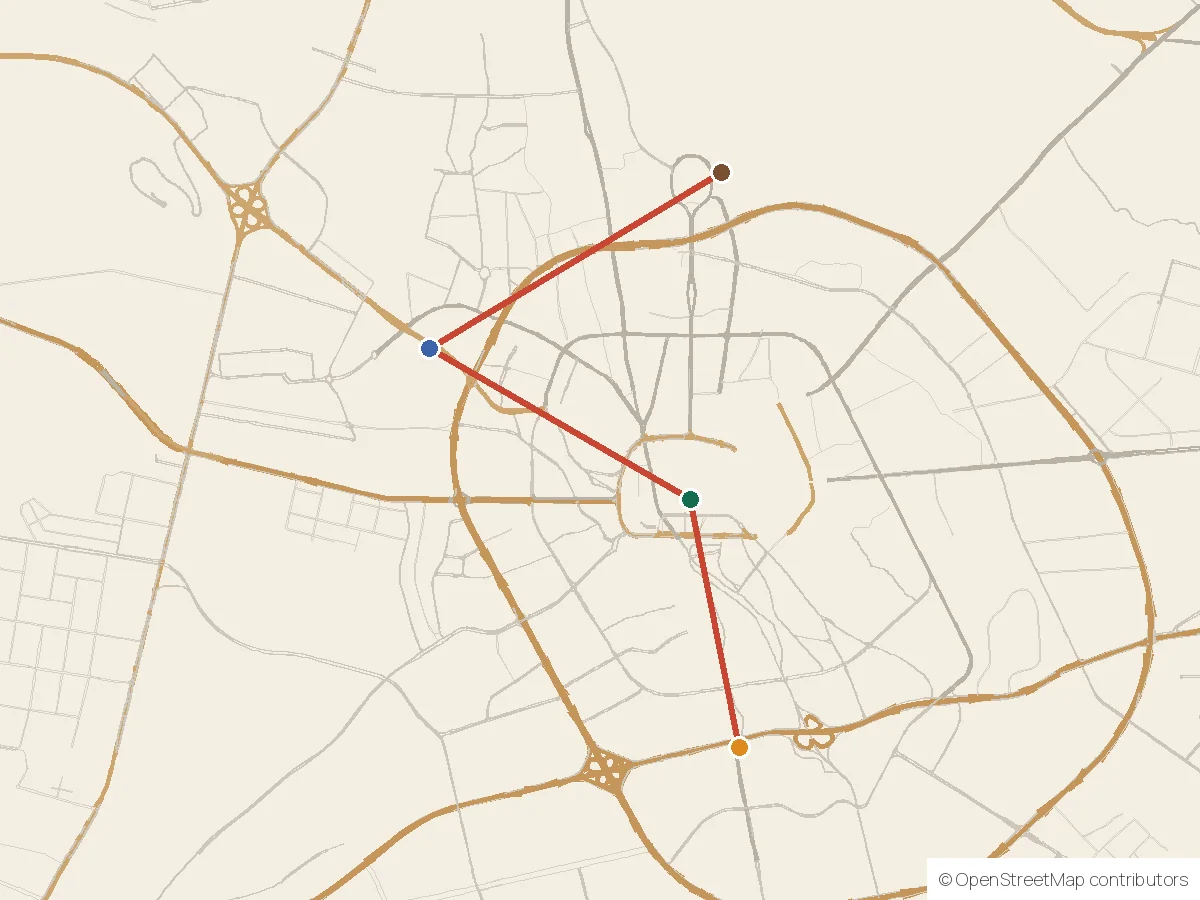
    Map of the route between Quba, Qiblatain and Mount Uhud
    Map data © OpenStreetMap contributors (ODbL). Map drawn by Living in Madina from OpenStreetMap data.
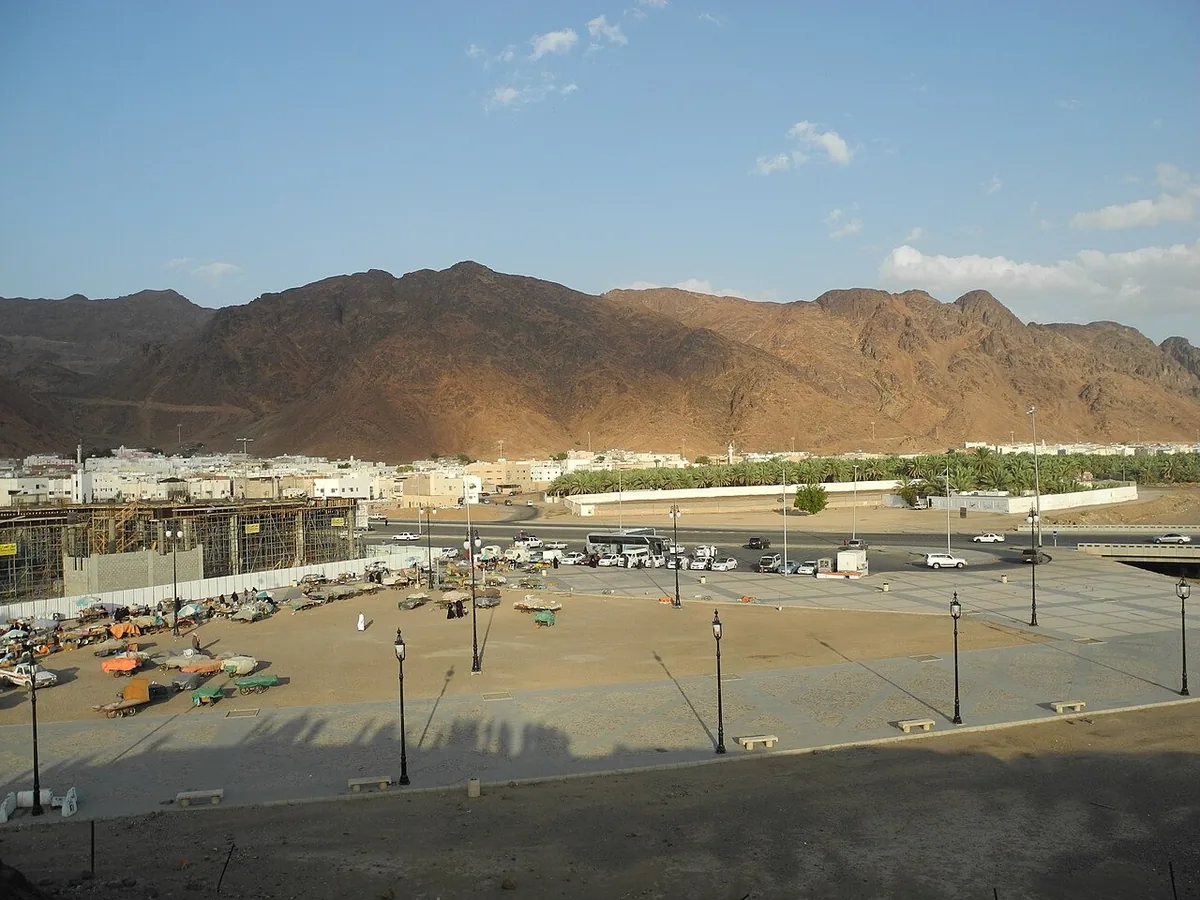
    Mount Uhud seen across the open plain
    Photo: Gunung Uhud.JPG by Imam Khairul Annas on Wikimedia Commons, CC BY 3.0. Resized to 1200×900, converted to WebP.

    At a glance

    • Quba Mosque: go early morning or after Asr.
    • Mount Uhud: calm, respectful, and avoid summer midday.
    • Friday: keep the morning for Jumu’ah; sightsee Saturday.
    • Comfort: water, shade and rest stops for all ages.

    Start with Quba Mosque

    Quba Mosque is in the Quba district, south of the central area. Visit Saudi describes it as a historic landmark among Madinah’s attractions; many residents make a regular habit of visiting.

    If you have extra time, you can add another historic stop: our guide to Masjid al-Qiblatayn, the Mosque of the Two Qiblas covers its history and visiting tips.

    It is also established in Sahih al-Bukhari that the Prophet ﷺ used to go to the Mosque of Quba every Saturday, sometimes walking and sometimes riding, and that Ibn Umar (may Allah be pleased with them) used to do the same (Sahih al-Bukhari 1193).

    Practical tips for families:

    • Make wudu at home before you leave, to save time at busy facilities.
    • Go early in the morning or after Asr to avoid the midday heat.
    • Dress modestly and comfortably, with shoes that are easy to slip on and off.
    • Keep children close in crowded areas and agree a meeting point with older children.
    • Getting there: Quba Road links the area with the centre of the city. Families living along the Al-Khalidiyah and Quba corridor can often get there quickly by car. Others can check whether a current Madinah Bus route suits them (see our Quba overview).

    Mount Uhud: history with reflection

    North of the city, Mount Uhud is closely linked to the Battle of Uhud in early Islamic history. Families often visit to reflect on the Seerah and pay their respects at the martyrs’ burial area at its foot.

    Visiting respectfully:

    • Prepare your children beforehand. A short, age-appropriate story about Uhud from a trusted Seerah book makes the visit far more meaningful than simply turning up.
    • Keep it calm and dignified near the burial area. Follow posted guidance and staff instructions, and keep your voice low. This is mainstream ziyarah etiquette — no practices beyond what is ordinarily taught.
    • Respect boundaries. Don’t climb restricted areas, and keep children away from rocky slopes.
    • Avoid summer midday. There’s little shade on open ground. Early morning is usually the most comfortable time.

    Access arrangements, facilities and any posted rules are set by the authorities and can change; follow on-site guidance.

    Sample half-day plan (adapt to the season)

    Time of daySuggestion
    Early morningWudu at home, then pray at Quba Mosque
    Mid-morningBreakfast nearby or at home
    Late morning (cooler months only)A short, respectful visit to Uhud
    MiddayHome for rest, especially in summer
    EveningA walk in a neighborhood park, or Maghrib/Isha at your local masjid or Masjid an-Nabawi

    In the hottest months, move the outdoor parts to after Asr and keep each stop short.

    Fitting the plan around Friday

    Friday is the main weekly day off for many families, and it centres on Jumu’ah. Many residents:

    • Keep Friday morning calm. Prepare for Jumu’ah and pray at their local masjid or at Masjid an-Nabawi, leaving early.
    • Save sightseeing for Saturday morning or after Asr on Friday.
    • Plan around traffic near the central area at prayer times.

    See our getting around guide for transport options.

    Keeping everyone comfortable

    Keeping everyone comfortable

    • Water and snacks for every child, plus a small first-aid kit.
    • Sun protection: hats, light clothing, and shade wherever you can find it.
    • Rest stops for grandparents and young children.
    • Health advice: if someone feels unwell from the heat, move them to shade and ask a pharmacist or doctor; MOH services are on Sehhaty. In an emergency, go to the nearest hospital emergency department.

    Small habits that make the weekend meaningful

    • Choose one short dua or story to talk about as a family at each place.
    • Keep phones away during prayer and take photos considerately, never at the expense of other worshippers.
    • Leave each place as clean as you found it.

    A calm weekend in Madinah doesn’t need a long list of stops. Two meaningful places, good timing and some patience are often enough. Related on this site: Quiet family outings and parks in Madinah and Living in Quba, Madinah.

    General information only. Access arrangements at religious and historic sites are set by the authorities and may change. Always follow official guidance and staff instructions on site.

    Last checked: 16 November 2026. Rules, fees and services change; confirm on the official sources below before you act.